Land Clearing vs Demolition | Which One Costs More & Why?
When property owners plan a new build, they often face two very different site-prep jobs: land clearing and demolition. Although both processes prepare a site for construction, they involve different equipment, labor, and permitting requirements. Consequently, their costs vary significantly. So, which one actually costs more, and why? Let’s break it down.
Understanding the Two Processes
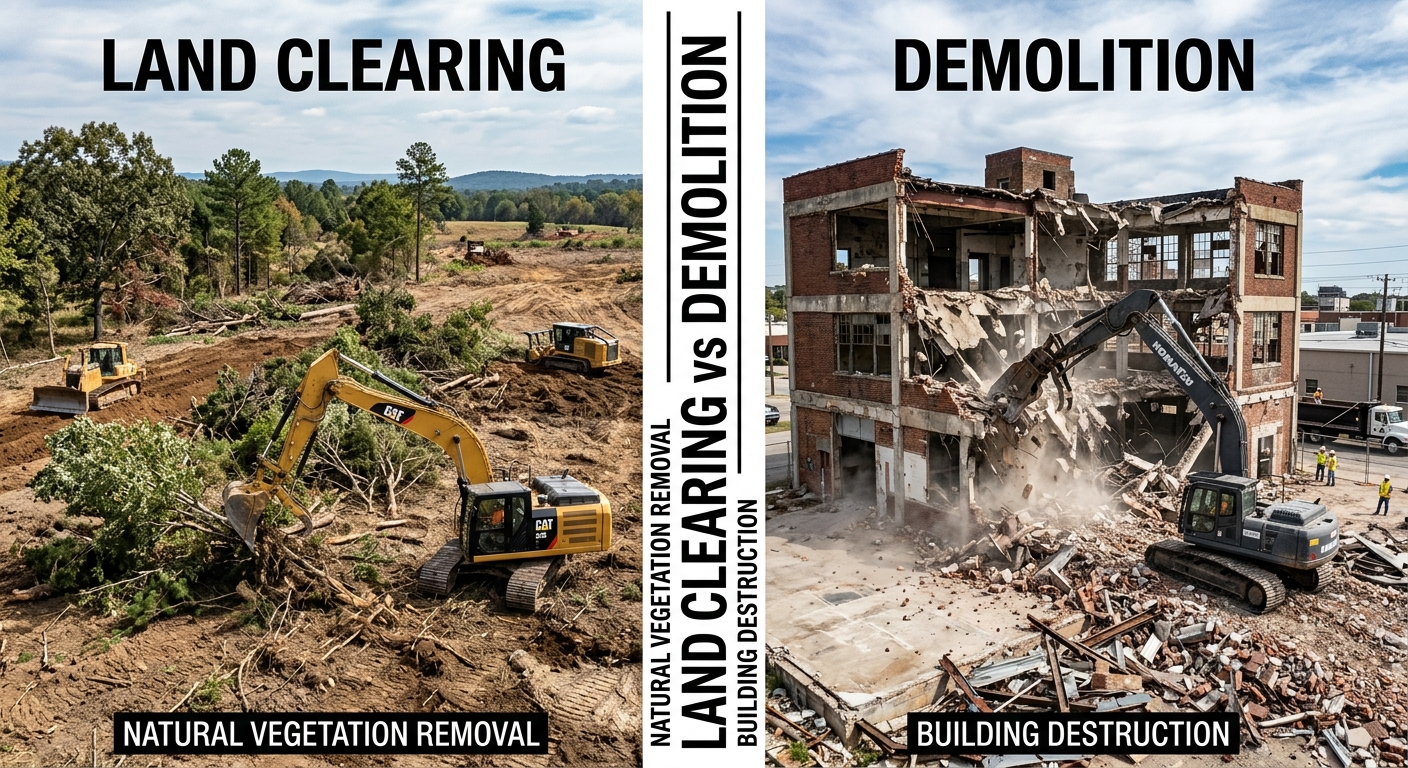
First, it helps to define each term clearly. Land clearing involves removing trees, brush, rocks, stumps, and vegetation from a plot of land to make it buildable. Meanwhile, demolition involves tearing down existing structures, houses, garages, sheds, or commercial buildings and hauling away the debris.
Because these tasks target completely different materials, their cost drivers differ too. Therefore, comparing them isn’t always straightforward; the final price depends heavily on site conditions, project scope, and location.
What Drives Land Clearing Costs?
Generally, land clearing costs range from $1,500 to $6,000 per acre, though heavily wooded or rocky terrain can push that number much higher. Several factors influence the final price:
- Vegetation density: Thick forests with mature trees cost more to clear than open fields with light brush.
- Terrain: Sloped, rocky, or wetland areas require specialized equipment, which raises costs.
- Stump removal: Grinding or extracting stumps adds significant labor and machine time.
- Debris disposal: Hauling away or burning cleared vegetation adds to the final bill.
- Accessibility: Remote or hard-to-reach land increases equipment transport costs.
Additionally, environmental regulations sometimes require erosion control measures or protected-species surveys, which can further increase expenses. As a result, land clearing costs can range from a few thousand dollars for a small residential lot to tens of thousands for larger commercial parcels.
What Drives Demolition Costs?
On the other hand, demolition typically costs more per square foot than land clearing per acre, primarily because buildings contain complex materials that require careful handling. On average, residential demolition costs $4 to $17 per square foot, while commercial demolition can climb even higher depending on the structure’s size and complexity.
Several factors push demolition costs upward:
- Building materials: Concrete, steel, and masonry structures cost more to demolish than wood-frame buildings.
- Hazardous materials: Asbestos, lead paint, or mold require specialized abatement before demolition can begin, which adds substantial cost.
- Utility disconnection: Gas, water, and electrical lines must be safely disconnected beforehand, adding both time and expense.
- Permits and inspections: Most municipalities require permits, inspections, and sometimes engineering reports before demolition proceeds.
- Debris removal: Concrete, drywall, and metal debris must be sorted, hauled, and disposed of properly, often at landfill or recycling fees.
- Building size and height: Multi-story structures require additional safety measures, cranes, or controlled implosions in extreme cases.
Because of these added layers — especially hazardous material remediation and utility work — demolition frequently costs more overall than land clearing, even on comparably sized lots.
Why Demolition Usually Costs More
So, why does demolition generally carry a higher price tag? Essentially, it comes down to complexity and risk. Demolishing a structure means dealing with man-made materials that were engineered to be durable and, in some cases, resistant to decay. Concrete foundations, steel reinforcement, and layered roofing systems all require heavy machinery, skilled operators, and careful sequencing to bring down safely.
Furthermore, older buildings often contain hazardous materials that weren’t originally regulated when the structure was built. Testing for and removing asbestos or lead paint, for instance, requires certified specialists, which significantly increases both time and cost.
In contrast, while land clearing can also be labor-intensive, it typically doesn’t involve the same level of regulatory oversight or specialized abatement work. Trees and vegetation, however dense, don’t usually pose the same environmental hazards that old buildings do. Thus, land clearing tends to scale more predictably with acreage, whereas demolition costs can spike unexpectedly once hidden hazards or structural complications are discovered.
When Might Land Clearing Cost More?
That said, land clearing isn’t always the cheaper option. If a property includes old-growth forest, wetlands, or difficult terrain, clearing costs can rival or even exceed demolition expenses. Similarly, large commercial parcels requiring extensive grading, drainage work, or environmental mitigation can quickly become expensive.
Moreover, if a project requires both processes for example, demolishing an old structure and then clearing surrounding land costs naturally add up. In these combined projects, it’s essential to get separate quotes for each phase so you understand exactly where your budget is going.
Tips to Manage Costs on Either Project
Regardless of which process your project requires, a few strategies can help control expenses:
- Get multiple quotes: Prices vary widely between contractors, so comparing at least three estimates is wise.
- Schedule a site assessment: A professional walkthrough helps identify hidden costs like hazardous materials or difficult terrain before work begins.
- Bundle services when possible: Some companies offer combined demolition-and-clearing packages, which can reduce overall costs.
- Check for recycling credits: Many demolition companies offset costs by recycling metal, concrete, or wood, so ask about potential savings.
- Plan around permits early: Since permitting delays can increase costs, applying early helps keep your project on schedule and on budget.
Frequently Asked Questions (FAQs)
1. Does land clearing or demolition cost more per project?
Demolition usually costs more overall because it involves specialized labor, hazardous material removal, and stricter permitting. However, land clearing can exceed demolition costs on heavily wooded, sloped, or environmentally sensitive land.
2. What is the average cost of land clearing per acre?
Land clearing typically costs between $1,500 and $6,000 per acre, depending on vegetation density, terrain, and stump removal needs. Rocky or forested land often falls at the higher end of that range.
3. How much does demolition cost per square foot?
Residential demolition generally costs $4 to $17 per square foot, while commercial demolition can run higher due to building size, material type, and structural complexity.
4. Why is demolition more expensive than land clearing?
Demolition involves engineered materials like concrete and steel, along with potential hazards such as asbestos or lead paint. Since these require certified specialists and careful handling, costs rise quickly compared to clearing natural vegetation.
5. Can I clear land and demolish a structure in the same project?
Yes, many projects require both processes, especially when replacing an old structure with new construction. Because each phase has distinct cost drivers, it’s best to get separate quotes for demolition and clearing work.
6. Do I need a permit for land clearing or demolition?
In most cases, yes. Demolition almost always requires permits and inspections, while land clearing permit requirements vary by municipality and often depend on lot size or environmental factors like wetlands.
7. How can I reduce land clearing or demolition costs?
Getting multiple quotes, scheduling a professional site assessment, and asking about recycling credits for demolition debris can all help lower costs. Additionally, applying for permits early prevents costly project delays.
8. Does hazardous material removal affect demolition pricing?
Absolutely. If asbestos, lead paint, or mold is present, abatement must happen before demolition begins, which significantly increases both timeline and cost.
9. Is land clearing cheaper for small residential lots?
Generally, yes, small residential lots with light vegetation cost less to clear than demolishing an existing structure of similar size. However, dense trees or difficult terrain can quickly change that comparison.
10. Which process takes longer, land clearing or demolition?
Timelines vary by project, but demolition often takes longer due to permitting, inspections, and hazardous material testing. Land clearing timelines depend mainly on acreage and vegetation density.
Final Thoughts
Ultimately, demolition tends to cost more than land clearing because it involves greater complexity, stricter regulations, and higher risks related to hazardous materials and structural safety. However, land clearing costs can rise sharply depending on vegetation density, terrain, and environmental requirements. Therefore, the true cost of your project depends less on which category it falls into and more on the specific conditions of your site.
Before starting any project, it’s worth consulting with licensed professionals who can assess your property and provide accurate estimates. That way, you’ll avoid surprises and keep your construction timeline and budget firmly on track.