18 Common Excavation Methods Used in Construction Projects
Every successful build starts below the surface. Before a single wall goes up, contractors must choose the right excavation methods to move earth safely, efficiently, and within budget. Whether you’re planning a residential foundation, a highway, or a commercial high-rise, understanding these techniques helps you select the best approach for your site conditions, soil type, and project timeline. Below, we break down 18 excavation methods that professionals rely on today, along with when and why each one works best.
1. Topsoil Excavation
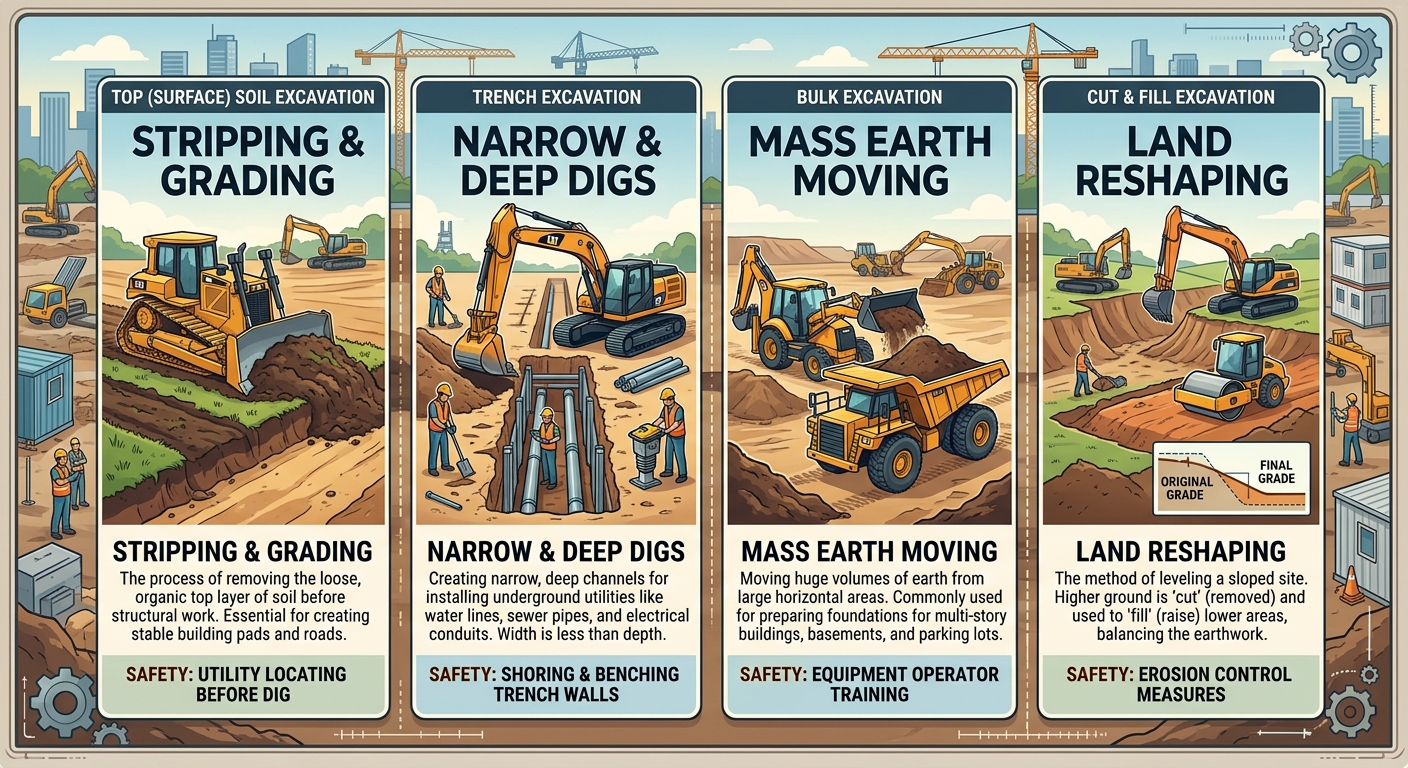
Crews strip the uppermost fertile soil layer first, since it often contains organic material unsuitable for load-bearing structures. Contractors typically stockpile this soil for later landscaping use.
2. Rock Excavation
When solid rock blocks the dig path, teams use drilling, blasting, or hydraulic breakers to fracture and remove it. Consequently, this method demands specialized equipment and strict safety protocols.
3. Muck Excavation
Muck excavation targets wet, unstable soil mixed with organic debris. Because this material can’t support structures, crews remove it entirely and replace it with compactable fill.
4. Cut and Fill Excavation
This technique balances excavation and embankment by cutting earth from high points and using it to fill low areas. As a result, it minimizes the need to haul soil off-site, thereby cutting costs.
5. Trench Excavation
Trenching creates narrow, deep channels for utilities like pipes, cables, and drainage systems. Since trenches can collapse easily, shoring and trench boxes are essential for worker safety.
6. Basement Excavation
Basement digs go deeper than standard foundations, requiring careful shoring and dewatering. Additionally, engineers must assess soil stability before excavation begins to prevent nearby structural damage.
7. Dredging
Used underwater, dredging removes sediment, sand, or debris from riverbeds, lakes, and harbors. Therefore, it plays a major role in flood control and waterway maintenance projects.
8. Channel Excavation
This method shapes waterways for irrigation, drainage, or flood management. Meanwhile, precise grading ensures water flows correctly without erosion issues down the line.
9. Borrow Excavation
When a site lacks sufficient fill material, crews source soil from a nearby “borrow pit.” Subsequently, this imported soil helps raise low-lying areas to the required grade.
10. Bridge Excavation
Bridge foundations demand excavation below water tables or riverbeds, often using cofferdams. Because water infiltration is a constant risk, dewatering pumps run continuously during the process.
11. Road Excavation
Also called roadway excavation, this method clears and grades earth to establish a stable base for pavement. Afterward, compaction ensures the surface can bear traffic loads long-term.
12. Drag Line Excavation
Operators use a dragline bucket suspended from a crane to scoop material across large distances. Notably, this method suits surface mining and large-scale earthmoving projects.
13. Cofferdam Excavation
Cofferdams are temporary watertight enclosures built to allow dry excavation in wet environments. Once installed, crews pump out water so they can work below the surface safely.
14. Earth Excavation
This general term covers removing soil to reach a designated depth for foundations, basements, or roadways. Typically, backhoes and excavators handle this work efficiently.
15. Stripping Excavation
Similar to topsoil removal, stripping clears vegetation, roots, and surface debris before deeper digging starts. Ultimately, this step prevents organic decay from weakening the foundation later.
16. Underground Excavation
Tunnels, subways, and underground utilities all require this method, which often involves boring machines or drill-and-blast techniques. Given the enclosed environment, ventilation and shoring are critical.
17. Slope Excavation
Slope excavation reshapes hillsides or embankments to create stable, gradual inclines. Consequently, engineers use retaining walls or terracing to prevent erosion and landslides.
18. Excavation for Footings and Foundations
This precise method digs to exact depths and dimensions specified in structural plans. Since accuracy directly affects a building’s stability, surveyors verify measurements at every stage.
Why the Right Excavation Method Matters
Choosing the correct technique isn’t just about digging a hole; it’s about protecting workers, controlling costs, and ensuring long-term structural integrity. Soil composition, water table depth, project scope, and local regulations all influence which method fits best. Partnering with an experienced excavation contractor gives you access to modern equipment, certified operators, and site-specific expertise that generic labor simply can’t match. That combination of precision, safety compliance, and efficiency is what separates a smooth project timeline from costly delays.
If you’re planning a construction project, don’t leave excavation to chance. Contact a licensed excavation contractor today to get a site assessment and a customized plan that fits your budget, soil conditions, and timeline.
Frequently Asked Questions (FAQs)
Q: What is the most common excavation method in residential construction?
A: Earth excavation and excavation for footings and foundations are used most often, since nearly every home needs a properly graded, stable base.
Q: How do contractors decide which excavation method to use?
A: They evaluate soil type, water table level, site accessibility, and the structure’s design requirements before recommending an approach.
Q: Is trench excavation dangerous?
A: Yes, trenching carries collapse risks. However, proper shoring, trench boxes, and OSHA-compliant safety measures significantly reduce hazards.
Q: Can excavation methods affect project cost?
A: Absolutely. Rock excavation and dewatering-heavy methods like cofferdam or bridge excavation typically cost more due to specialized equipment and labor.
Q: How long does a typical excavation project take?
A: Timelines vary widely; a small trench might take a day, while basement or underground excavation can take weeks depending on depth and soil conditions.