
Everything You Need to Know About Basement Excavation Before You Dig
Basement excavation is the first and most important step in adding usable space below your home. However, mistakes at this stage cost thousands of dollars and delay your project for months. Therefore, you should understand the process, the costs, and the risks before a single shovel hits the ground. This guide answers your key questions so you can hire, budget, and plan wisely.
What Is Basement Excavation and How Does It Work?
Basement excavation services are the process of removing soil to create space for a basement. It applies to new construction, and it also applies to existing homes that need a deeper foundation. Crews dig to a planned depth, shape the walls, and prepare the base for footings and waterproofing. Because the work supports your entire structure, precision matters more than speed.
Why Basement Excavation Matters for Your Home’s Safety and Value
A well-executed dig protects your home’s stability. Moreover, it controls water, prevents future cracks, and creates the right base for concrete work. Meanwhile, a poor dig invites flooding, wall movement, and expensive repairs. As a result, most experts treat excavation as the foundation of the foundation.
The Basement Excavation Process | 5 Steps From Site Survey to Backfill
1. Site Survey and Soil Testing
First, a surveyor marks your property lines and maps utilities. Next, an engineer tests your soil. Clay, sand, and rock each behave differently, so the results shape your digging method and wall support. Soil testing also reveals the water table, which affects drainage planning.
2. Permits and Utility Locates
Before any digging starts, you must secure local building and excavation work permits. In addition, your contractor should call the utility locating service to mark gas, water, electric, and sewer lines. Skipping this step risks fines, damaged lines, and serious injuries.
3. Shoring and Safety Planning
Trenches and deep cuts can collapse without support. Therefore, crews install shoring, bracing, or sloped walls based on the soil report. They also plan equipment access and soil storage, so the site stays safe and organized.
4. The Dig
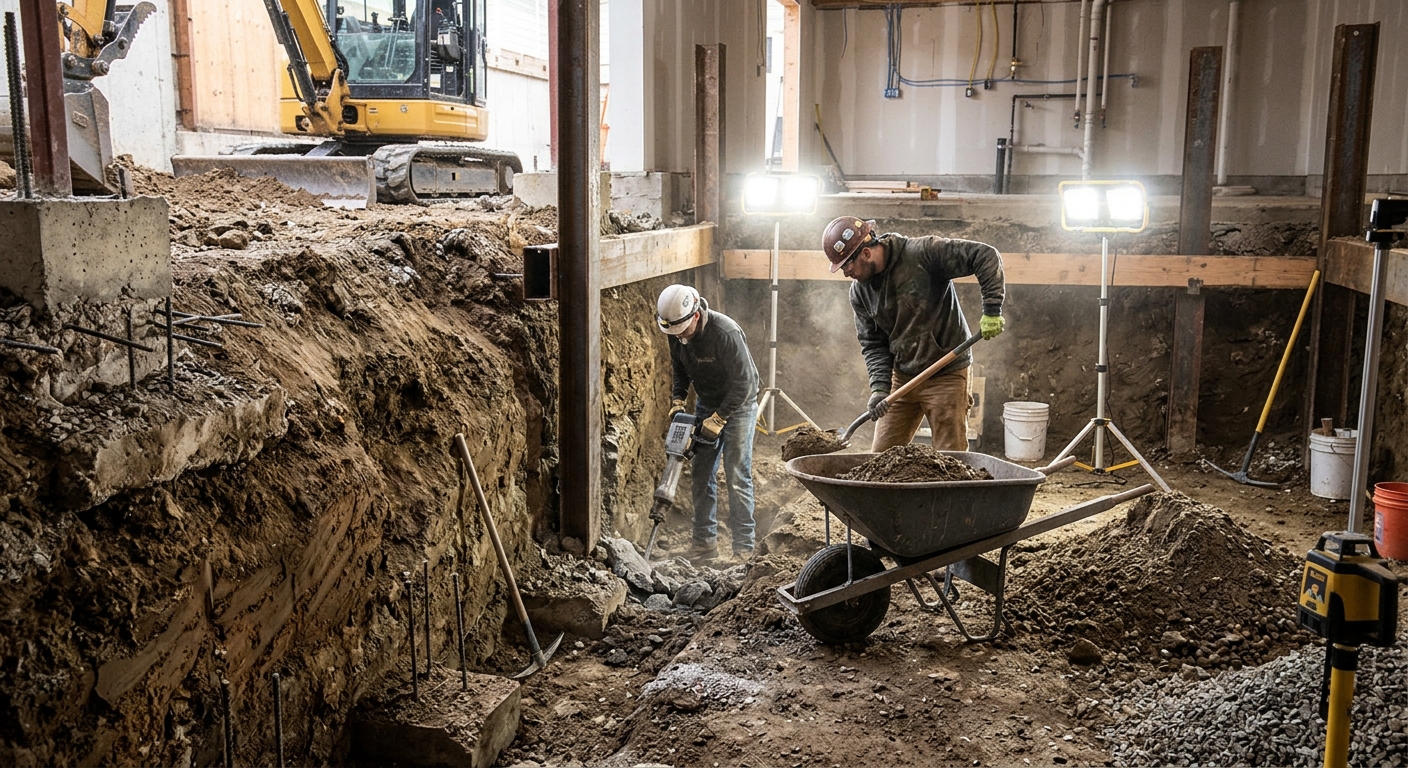
Then the machines go to work. Excavators remove soil in layers while operators check depth with laser levels. Meanwhile, trucks haul away extra soil, or crews stockpile it for backfill. Good operators dig slightly oversize to leave room for forms and waterproofing.
5. Footings, Drainage, and Waterproofing
After the dig, crews pour footings and install drain tile. Next, they apply waterproof membranes to the foundation walls. Finally, they backfill with gravel and soil in compacted layers. This sequence keeps water away from your new living space.
Basement Excavation Cost | What Affects the Price and How to Budget
Costs vary widely by region, soil type, and access. In general, these factors drive your price:
- Size and depth: More soil means more machine time and hauling.
- Soil conditions: Rock and heavy clay slow the work and raise costs.
- Site access: Tight lots require smaller equipment and extra labor.
- Water management: High water tables need pumps or dewatering.
- Disposal: Hauling and dumping soil adds a noticeable line item.
Because every site differs, always request a written, itemized quote. In addition, ask what happens if crews hit rock or groundwater, since surprises cause most budget overruns.
Common Basement Excavation Challenges and How to Solve Them
Even careful projects meet obstacles. Fortunately, you can plan for most of them.
Groundwater and Poor Drainage
Water is the biggest enemy of any basement. Therefore, discuss sump pumps, exterior drains, and grading before construction starts.
Existing Foundations and Underpinning
If you plan to lower an existing basement or add one beneath a finished house, crews must use underpinning. This technique supports your home in small sections while they dig below it. It takes longer and costs more, so only hire experienced specialists.
Neighboring Properties
Digging close to a neighbor’s wall can shift soil and cause damage. Consequently, many contractors document nearby structures first and use extra shoring.
How Long Does Basement Excavation Take?
Most residential digs take three to ten working days. However, weather, soil, and inspections can extend that time. For example, heavy rain halts work and floods the pit, while rock requires specialized equipment. Plan a buffer in your schedule, and you will avoid stress.
How to Choose the Right Excavation Contractor
Selecting the right team protects your investment. Specifically, look for these qualities:
- Licenses and insurance: Verify both before signing anything.
- Local experience: Contractors who know your soil make better decisions.
- Clear contracts: Written scopes, timelines, and change-order rules prevent disputes.
- Verified references: Call past clients and visit finished projects.
- Modern equipment: Laser grading and right-sized machines improve accuracy.
Why Homeowners Trust Us for Basement Excavation
At [Your Company Name], we combine licensed crews, upfront pricing, and precise machine work. We locate utilities before we dig, we explain every step in plain language, and we back our work with a written guarantee. Because we treat your property like our own, you get fewer surprises and a cleaner site from day one.
Ready to Start Your Basement Excavation? Get a Free Quote Today
Do not guess when a foundation is at stake. Call Elite Concrete Restoration today or request a free, no-obligation basement construction contractor quote. We will visit your site, review your soil conditions, and give you a clear price and timeline.
Frequently Asked Questions (FAQs)
How much does basement excavation cost?
Costs depend on size, depth, soil, access, and water conditions. Most projects require a site visit for an accurate quote. Always ask for an itemized estimate so you can compare bids fairly.
Do I need a permit for basement excavation?
Yes, almost every municipality requires one. Your contractor can usually handle the application, but you should confirm who is responsible before work begins.
Can you excavate a basement under an existing house?
Yes. Crews use underpinning to support the home while they dig below it. Because this method carries higher risk, hire a contractor with proven underpinning experience and an engineer’s plan.
How deep should a basement excavation go?
Most basements reach eight to nine feet below grade to allow comfortable ceiling height after the slab and finishes. Your local code and frost line also influence the final depth.
What is the biggest risk during basement excavation?
Water and soil collapse top the list. However, proper soil testing, shoring, and drainage planning reduce both risks significantly.
Can I dig my own basement to save money?
You technically can, but you should not. Deep trenches create serious safety hazards, and errors threaten your foundation. Professionals also carry the insurance and equipment that protect you.
When is the best time of year to excavate?
Late spring through early fall works best because soil stays drier and more stable. Still, experienced crews can dig in colder months with proper planning.