
How Long Does Basement Excavation Take? A Realistic Timeline
Most new-construction basement excavations take 2 to 5 working days for the dig and hauling. However, the full process takes longer. Permits, site prep, and work site inspections can add 3 to 10 weeks before and after the dig. Meanwhile, lowering an existing basement floor usually takes 4 to 12 weeks.
This guide gives you a realistic timeline. Moreover, it shows what speeds up the work and what slows it down, so you can plan with confidence.
Basement Excavation Timeline | What to Expect From Start to Finish
Project Type | Typical Dig Time | Total Phase Time (with prep) |
New home, standard basement | 2–5 days | 3–8 weeks |
Large or walkout basement | 4–8 days | 5–10 weeks |
Rocky or wet site | 1–3 weeks | 6–14 weeks |
Lowering an existing basement | 4–12 weeks | 6–16 weeks |
These ranges reflect typical residential projects. Nevertheless, your site may differ, so treat them as planning estimates.
Basement Excavation Process | A Step-by-Step Guide
Step 1: Planning and Permits (2–8 Weeks)
First, your contractor reviews the plans and surveys the lot. Next, they apply for building and excavation permits. Local offices often take the longest here, so start early. Additionally, call your utility locator service before anyone breaks ground. This step usually takes a few days.
Step 2: Site Preparation (1–2 Days)
Then the crew clears trees, topsoil, and debris. They also mark the footprint, set grade stakes, and install erosion control. Consequently, the machines can work safely and efficiently once digging begins.
Step 3: The Dig Itself (2–5 Days)
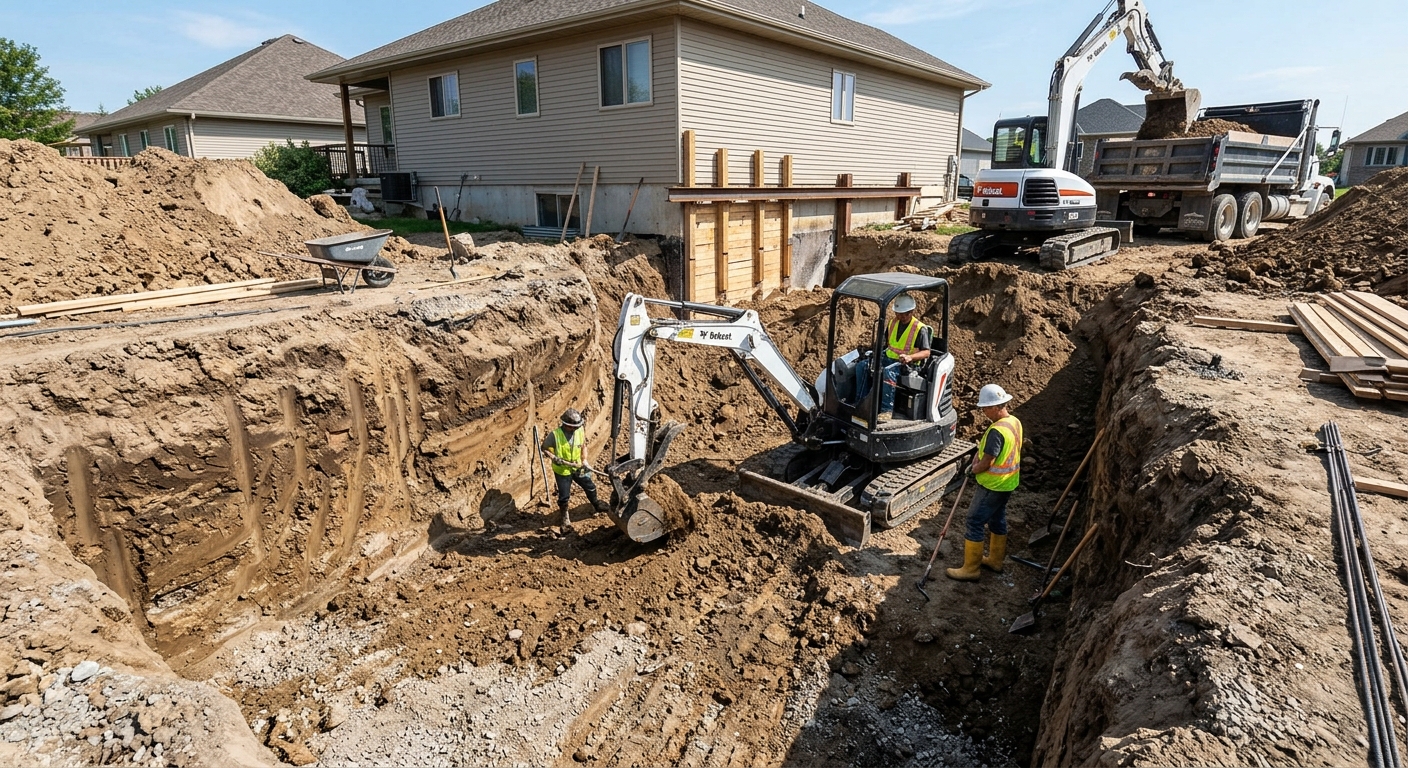
Next, excavators remove soil to the planned depth, which is usually 8 to 10 feet. Trucks haul away the extra dirt. Furthermore, a skilled operator can move several hundred cubic yards in a single day. Therefore, a typical home needs only a few days of actual digging.
Step 4: Footings, Walls, and Waterproofing (2–4 Weeks)
After the dig, crews pour footings and build the foundation walls. Subsequently, they apply waterproofing and drainage. Concrete needs curing time, so this phase often takes longer than the excavation.
Step 5: Inspection and Backfill (3–7 Days)
Finally, the inspector approves the work. Only then does the crew backfill around the walls and grade the soil. In short, inspections keep the project legal and safe.
What Speeds Up or Slows Down Basement Excavation?
Several factors change the schedule. Here are the biggest ones.
Soil Type
Sandy or loamy soil digs quickly. In contrast, clay slows machines, and bedrock can add weeks. For example, crews may need hydraulic hammers to break through rock. A soil test before you start prevents costly surprises.
Weather
Rain turns a site to mud, and frozen ground resists digging. As a result, wet seasons often delay projects by several days. Dry months move faster.
Water Table and Drainage
High groundwater forces crews to install pumps or dewatering systems. Therefore, a wet lot can double your excavation cost and time.
Site Access and Size
Tight lots limit machine size. Likewise, long haul routes slow trucks. On the other hand, open, flat lots let crews work at full speed.
Basement Size and Depth
A bigger footprint and deeper floor mean more soil to move. Consequently, a 2,500-square-foot basement takes noticeably longer than a 1,200-square-foot one.
Existing Structures
Lowering a basement under an occupied house requires underpinning. Crews work in small sections, so the process moves slowly by design. Safety comes first in this case.
How to Avoid Basement Excavation Delays
You can protect your timeline with a few smart choices:
- Apply for permits early. Delays here cost the most time.
- Order a soil report. Knowing the ground conditions prevents change orders.
- Schedule around the weather. Late spring and early fall often work best.
- Confirm utility locates. Marked lines avoid dangerous stops.
- Hire an experienced crew. Skilled operators finish faster and make fewer mistakes.
Why Homeowners Trust Us With Basement Excavation
Choosing the right contractor shapes your schedule more than any other decision. [Your Company Name] stands apart for three reasons:
- Fixed timelines in writing. We commit to a schedule and update you daily.
- Licensed, insured crews. We handle permits, utility locates, and inspections for you.
- Modern equipment and soil expertise. We match machines to your site, so we finish sooner and protect your property.
Ready for a realistic schedule? Call us today or request a free site assessment and timeline estimate. We will review your plans, test your conditions, and give you a clear start and finish date.
Frequently Asked Questions (FAQs)
How many days does it take to dig a basement?
A standard residential basement takes 2 to 5 working days to dig. Large lots, rock, or groundwater can extend that to two weeks or more.
How long does the entire basement construction take?
From excavation work through backfill, expect 3 to 8 weeks for a typical home. Permits can add more time before work starts.
Does weather really delay basement excavation?
Yes. Heavy rain, standing water, and frozen ground all slow or stop digging. Therefore, good contractors build weather days into the schedule.
How long does it take to lower an existing basement floor?
Most lowering projects take 4 to 12 weeks. Underpinning happens in stages, and the concrete needs time to cure between sections.
Can I speed up basement excavation?
You can. File permits early, test the soil, clear site access, and hire an experienced crew. However, never rush inspections or shortcut safety.
What is the biggest cause of excavation delays?
Permit approval and unexpected ground conditions cause most delays. Rock, high water tables, and buried utilities rank next.
Do I need to be home during excavation?
No, but stay reachable. Your contractor may need quick decisions about changes in soil or layout.
What does basement excavation cost?
Costs depend on size, depth, soil, and hauling distance. A free on-site estimate gives the most accurate figure.
Final Takeaway
The dig itself moves fast, usually 2 to 5 days. Nevertheless, permits, soil, weather, and inspections shape the full timeline. Plan for several weeks overall, and build in a small buffer. With the right preparation and an experienced team, your basement excavation project stays on track.