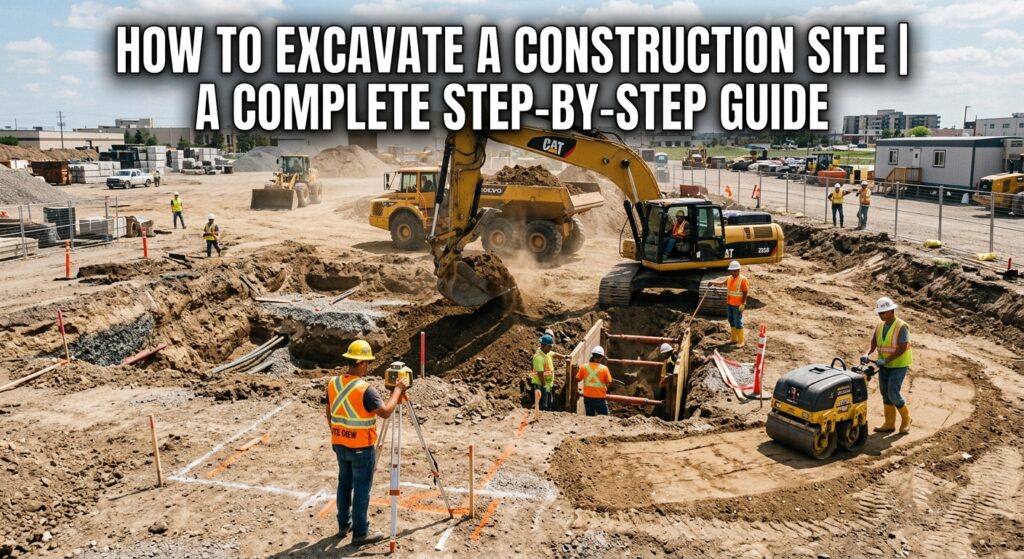
How to Excavate a Construction Site | A Complete Step-by-Step Guide
Every solid structure starts below the ground, not above it. Therefore, proper site excavation forms the true foundation of any successful construction project. Whether you’re building a home, a commercial complex, or a road, you must excavate a construction site correctly before pouring a single yard of concrete. In this guide, we’ll walk you through the entire excavation process, explain the costs involved, highlight the benefits, and share expert tips so you can plan your project with confidence.
What Is Construction Site Excavation?
Excavation refers to the process of removing earth, rock, and other materials to create a stable foundation, basement, trench, or roadway. Contractors use specialized equipment like excavators, bulldozers, and backhoes to dig, move, and shape the land according to engineering plans. Consequently, this stage determines how safely and efficiently the rest of the build proceeds.
Why You Need Proper Excavation
Many first-time builders underestimate excavation and focus only on the visible structure. However, skipping or rushing this step often leads to foundation cracks, drainage problems, and costly delays later. Because of this, professional excavation delivers several key benefits:
- Structural stability: A properly excavated site supports the foundation evenly, preventing future settling.
- Better drainage: Correct grading directs rainwater away from the structure, reducing flood risk.
- Fewer surprises: Early excavation reveals underground utilities, rocks, or soil issues before construction begins.
- Cost savings: Fixing a problem before construction is far cheaper than repairing it afterward.
As a result, investing time and money into proper excavation ultimately protects your entire project.
Step-by-Step Process to Excavate a Construction Site
1. Site Assessment and Soil Testing
First, hire a geotechnical engineer to test the soil composition. This step reveals whether the ground can support your planned structure. Meanwhile, a land survey confirms property boundaries and elevation levels.
2. Obtain Permits and Utility Clearance
Next, apply for the necessary excavation permits from your local municipality. Simultaneously, contact utility companies to mark underground gas, water, and electrical lines. This precaution prevents accidents and legal complications down the road.
3. Plan the Excavation Layout
Afterward, engineers and contractors create a detailed excavation plan, including depth, slope, and drainage requirements. Consequently, this blueprint guides every machine operator on-site.
4. Clear the Site
Before digging begins, crews remove trees, debris, rocks, and existing structures. Additionally, they strip away topsoil and store it separately for later landscaping use.
5. Set Up Grading and Layout Stakes
Then, surveyors place stakes and string lines to mark excavation boundaries and depth levels. This step ensures every cut and fill matches the approved blueprint precisely.
6. Begin Excavation
Once the layout is confirmed, operators use excavators, bulldozers, or backhoes to dig according to plan. Meanwhile, dump trucks haul away excess soil and debris. Throughout this phase, supervisors monitor depth and slope constantly to avoid over-digging.
7. Install Shoring and Drainage Systems
Subsequently, crews install shoring or retaining walls if the excavation is deep, preventing soil collapse. At the same time, they add drainage pipes or gravel beds to manage water flow.
8. Grade and Compact the Soil
Finally, workers compact the exposed soil using rollers or plate compactors. This process creates a firm, stable base ready for the foundation.
9. Final Inspection
Before construction proceeds, inspectors verify depth, compaction, and drainage against approved plans. Only after passing inspection should the foundation work begin.
How Much Does It Cost to Excavate a Construction Site?
Excavation costs vary widely depending on soil type, site size, depth, and accessibility. On average, homeowners and contractors pay:
- Small residential projects: $1,500–$6,000
- Basement excavation: $5,000–$15,000
- Large commercial sites: $10,000–$100,000+
Furthermore, factors like rocky terrain, tree removal, and utility relocation can increase these figures significantly. Therefore, always request multiple quotes and a detailed cost breakdown before hiring a contractor.
Expert Tips for Safe and Efficient Excavation
- Hire licensed professionals. Since excavation involves heavy machinery and structural risk, always work with experienced, insured contractors.
- Check weather conditions. Rain and frost can destabilize soil, so schedule excavation during dry, stable weather whenever possible.
- Mark utilities clearly. Otherwise, you risk hitting gas or electrical lines, which can cause serious injury and expensive repairs.
- Monitor soil type closely. Because sandy or clay-heavy soil behaves differently, adjust equipment and techniques accordingly.
- Prioritize safety gear and shoring. Consequently, deep trenches require shoring systems to prevent cave-ins and protect workers.
- Plan for spoil removal. Arrange dump trucks in advance so excavated soil doesn’t pile up and delay progress.
Why Choose Professional Excavation Services?
While DIY excavation might seem cost-effective initially, it often leads to uneven grading, drainage failures, and safety hazards. In contrast, professional excavation teams bring specialized equipment, trained operators, and engineering expertise to every job. As a result, you get a safer site, faster timelines, and a foundation built to last. If you’re planning a construction project, contact a licensed excavation contractor today for a free site assessment and accurate cost estimate.
Frequently Asked Questions (FAQs)
Q1: How long does it take to excavate a construction site?
Typically, small residential excavations take 1–3 days, while larger commercial projects can take several weeks, depending on site size and soil conditions.
Q2: Do I need a permit to excavate my property?
Yes, in most municipalities. Because excavation affects drainage, utilities, and neighboring properties, local authorities require permits before work begins.
Q3: What equipment is used for construction excavation?
Common equipment includes excavators, backhoes, bulldozers, skid steers, and dump trucks, depending on the project’s scale and soil type.
Q4: Can excavation be done in winter?
Yes, although frozen or waterlogged ground makes digging harder. Therefore, contractors often adjust techniques or wait for better conditions when possible.
Q5: What’s the difference between excavation and grading?
Excavation removes soil to create depth, while grading levels and shapes the surface for proper drainage and foundation support.
Final Thoughts
Ultimately, excavating a construction site correctly sets the tone for your entire project’s success. From soil testing to final compaction, every step matters. Therefore, partnering with an experienced excavation team ensures safety, compliance, and long-term structural integrity. Ready to break ground? Reach out to our excavation experts today for a personalized quote and get your project moving in the right direction.