What's the Difference Between Concrete and Cement?
Many homeowners and builders use “concrete” and “cement” interchangeably. However, these two materials are completely different in composition, function, and application. Understanding this distinction matters greatly, especially if you’re planning a construction project, renovating your property, or simply want to make informed decisions about building materials.
In this guide, we’ll break down everything you need to know about concrete versus cement, including costs, benefits, practical tips, and answers to frequently asked questions.
What Is Cement?
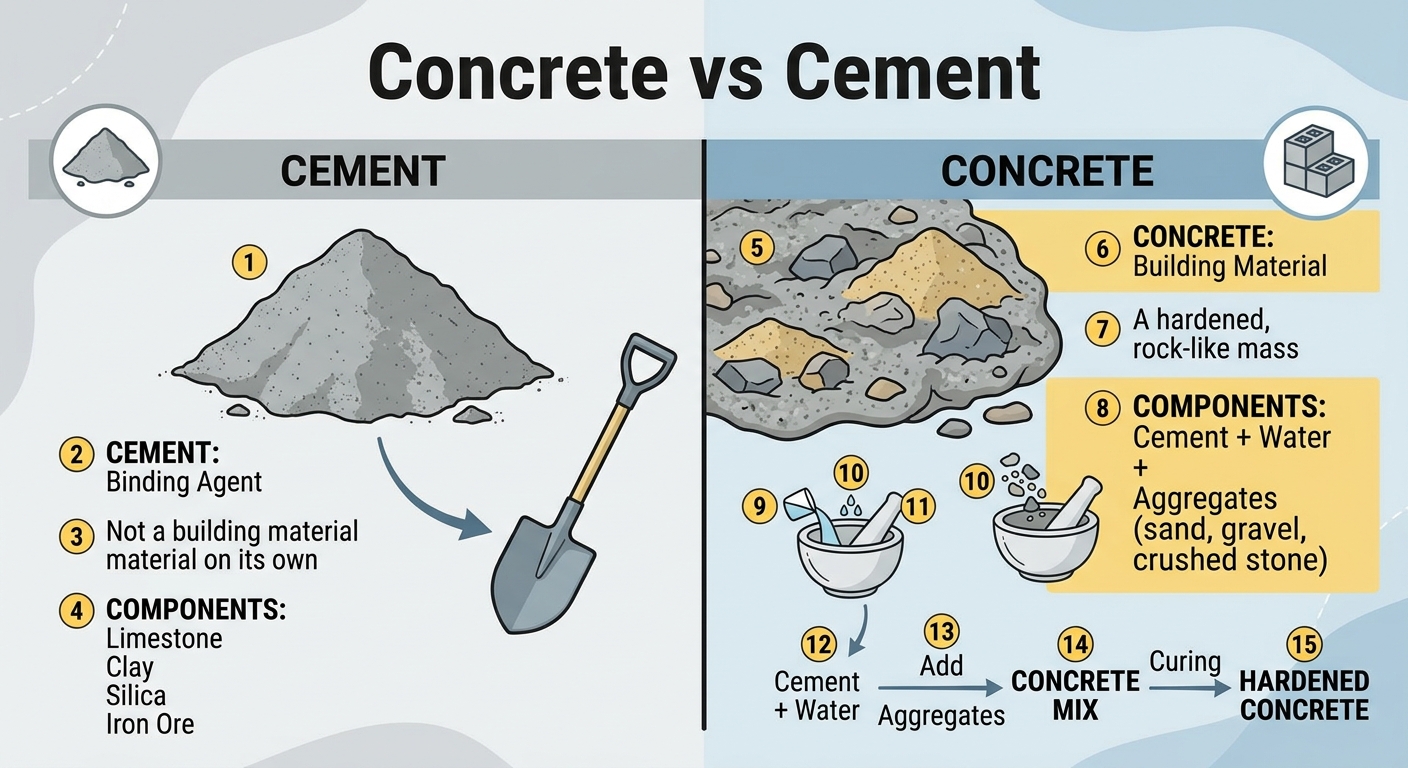
Cement is a fine, powdery binding material made from limestone, clay, shells, and silica sand. Manufacturers grind these raw materials together and heat them in a kiln to produce clinker, which then gets ground into the fine powder we recognize as cement.
Essentially, cement acts as the “glue” that holds other materials together. On its own, cement isn’t particularly strong or durable. Instead, it serves as one ingredient within a larger mixture.
What Is Concrete?
Concrete, on the other hand, is a composite material made by combining cement, water, sand, and aggregate (such as gravel or crushed stone). Once mixed, this combination undergoes a chemical reaction called hydration, which causes it to harden into the sturdy, durable material used in concrete sidewalks, foundations, driveways, and buildings.
Therefore, cement is just one component of concrete not the finished product itself. Think of cement as flour and concrete as the finished cake; you need the flour, but it’s only part of the recipe.
Key Differences Between Concrete and Cement
Feature | Cement | Concrete |
Composition | Limestone, clay, silica | Cement, water, sand, aggregate |
Function | Binding agent | Structural building material |
Strength | Weak alone | Strong and durable |
Appearance | Fine gray powder | Solid, rock-like material |
Common Uses | Mortar, plaster, grout | Foundations, pavements, walls |
Consequently, when someone says “pour the cement,” they technically mean “pour the concrete,” since cement alone cannot be poured into forms for construction.
Why This Distinction Matters for Your Project
Understanding this difference isn’t just a matter of vocabulary it directly impacts your project’s success. For instance, using cement alone where concrete is needed would result in a weak, crumbling structure. Similarly, ordering the wrong material from a supplier could delay your project and increase costs unnecessarily.
Moreover, knowing the difference helps you communicate more effectively with contractors, estimate costs accurately, and choose the right material for your specific application.
Cost Comparison | Concrete vs. Cement
Generally speaking, cement costs more per pound than concrete because of its refined manufacturing process. However, since concrete requires larger quantities for most projects, overall project costs typically favor concrete for structural work.
- Cement: Roughly $10–$18 per 50-pound bag, depending on brand and location
- Concrete: Approximately $110–$165 per cubic yard when ready-mixed and delivered
Additionally, factors like labor, delivery distance, project size, and regional pricing can significantly affect your final costs. As a result, it’s always wise to get multiple quotes before starting your project.
Benefits of Using Concrete
Concrete offers numerous advantages for construction projects, which explains its popularity worldwide:
- Exceptional durability – Concrete structures can last 50-100 years with proper maintenance
- Fire resistance – Unlike wood, concrete doesn’t burn or contribute to fire spread
- Low maintenance – Once cured, concrete requires minimal upkeep
- Versatility – Suitable for foundations, driveways, patios, and decorative applications
- Cost-effectiveness – Long-term durability reduces replacement and repair expenses
Benefits of Using Cement
While cement rarely stands alone, it remains essential for several applications:
- Mortar production – Binds bricks and blocks together during masonry work
- Plastering – Creates smooth wall finishes
- Grouting – Fills gaps between tiles
- Repair work – Patches small cracks and surface imperfections
How to Choose Between Concrete and Cement | Expert Tips
Before starting your next project, consider these helpful tips:
First, identify your project type. Structural work like foundations and driveways requires concrete, whereas smaller repair jobs might only need cement-based products.
Next, consult a professional contractor if you’re unsure. Their expertise ensures you’re using the correct material and proportions for your specific needs.
Additionally, always check the mix ratio when purchasing pre-mixed concrete bags, as different ratios suit different applications.
Furthermore, consider weather conditions before pouring concrete, since extreme heat or cold can affect curing time and final strength.
Finally, factor in curing time when planning your project timeline. Concrete typically takes 24-48 hours to set and up to 28 days to reach full strength.
Top Mistakes That Ruin Concrete Projects (And How to Avoid Them)
Even experienced builders sometimes make errors when working with these materials. Therefore, keep these pitfalls in mind:
- Using cement without proper aggregate ratios
- Ignoring water-to-cement ratio guidelines, which affects strength
- Pouring concrete during extreme temperatures without protective measures
- Skipping proper curing procedures, leading to premature cracking
Frequently Asked Questions (FAQs)
Q1: Can cement be used without concrete?
Yes, but only for specific applications like mortar, plaster, or grout. Cement alone lacks the compressive strength needed for structural work like foundations.
Q2: Which is stronger, concrete or cement?
Concrete is significantly stronger because the aggregate provides structural integrity that cement alone cannot achieve.
Q3: How long does concrete take to cure completely?
While concrete becomes walkable within 24-48 hours, it typically reaches full strength after approximately 28 days.
Q4: Is cement more expensive than concrete?
Per unit weight, cement costs more; however, concrete typically costs more overall for large projects since it requires substantially larger quantities.
Q5: Can I make concrete at home?
Absolutely. By mixing cement, sand, aggregate, and water in the correct ratio, you can create concrete for small DIY projects like garden paths or patio repairs.
Final Thoughts
Ultimately, understanding the difference between concrete and cement empowers you to make smarter decisions for your construction or renovation project. While cement serves as the essential binding ingredient, concrete delivers the strength and durability required for lasting structures.
If you’re planning your next building project and need guidance on selecting the right materials, our team of experts is ready to help. Contact us today for a free consultation and personalized recommendations tailored to your project’s specific needs.