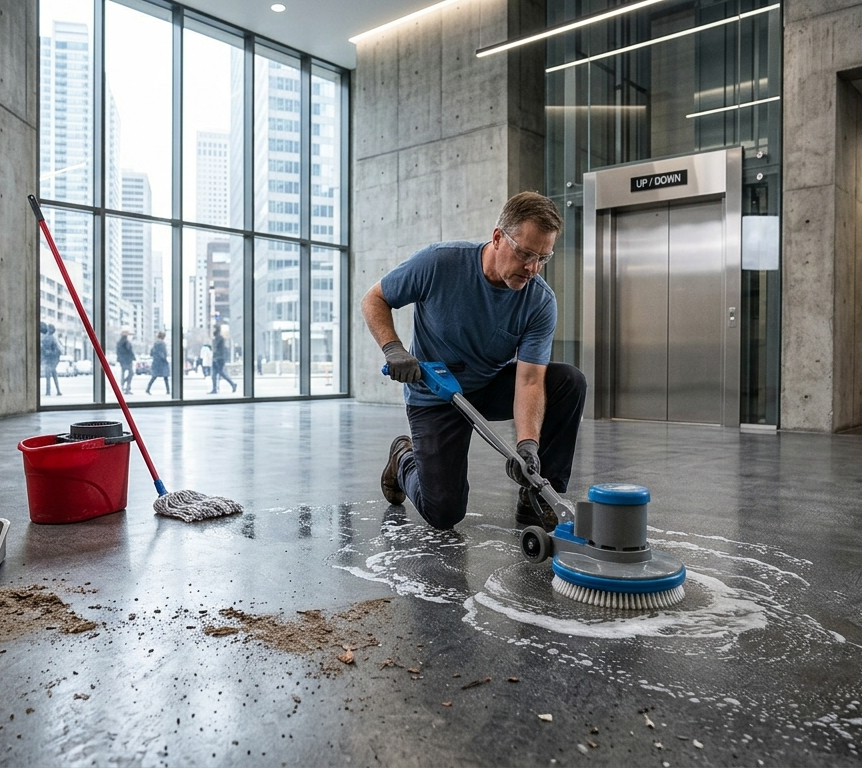
How to Clean Concrete Floors Without Damaging the Surface
Concrete floors bring durability and industrial charm to garages, basements, and patios. However, harsh chemicals, abrasive tools, and improper techniques can quickly wear down the surface, causing discoloration, pitting, or cracking. Therefore, learning the right cleaning approach protects your investment while keeping the floor looking fresh for years.
Why Proper Cleaning Matters
Concrete is porous, so it absorbs liquids, oils, and dirt over time. Consequently, using the wrong cleaning method can trap stains deeper rather than lifting them out. Additionally, aggressive scrubbing or acidic cleaners may erode the protective sealant, leaving the surface vulnerable to moisture damage and cracking. For this reason, gentle yet effective cleaning methods are essential for long-term floor health.
Step-by-Step Guide to Safe Concrete Cleaning
1. Sweep or Vacuum First
Before applying any liquid, remove loose dirt, dust, and debris with a broom or shop vacuum. Otherwise, grit particles can scratch the surface once you start scrubbing.
2. Choose a pH-Neutral Cleaner
Instead of reaching for bleach or vinegar, opt for a pH-neutral concrete cleaner. As a result, you avoid breaking down the sealant while still lifting grease and grime effectively.
3. Test in a Small Area
Prior to full application, test the cleaner on an inconspicuous corner. This way, you can confirm it won’t discolor or react negatively with the concrete’s finish.
4. Use a Soft-Bristle Brush
Rather than wire brushes or steel wool, use a soft-bristle or nylon brush. Meanwhile, apply moderate pressure to avoid creating micro-scratches that dull the surface over time.
5. Mop with Warm Water
After scrubbing, mop the area with warm water to rinse away cleaner residue. Subsequently, allow the floor to air dry, or use a squeegee for faster results.
6. Address Stains Individually
For oil or rust stains, apply a poultice made of baking soda and water, then let it sit overnight. Afterward, wipe it away gently rather than scraping forcefully.
7. Reseal When Necessary
Since sealant wears down over time, reapply a concrete sealer every one to three years. Thus, the floor stays protected against moisture, stains, and abrasion.
Helpful Tips for Long-Lasting Results
- Always use soft microfiber mops instead of abrasive scrub pads.
- Avoid pressure washers on sealed floors, as high pressure can strip coatings.
- Wipe up spills immediately to prevent staining and etching.
- Use floor mats near entryways to reduce dirt buildup.
- Never mix cleaning chemicals, since certain combinations produce harmful fumes.
- Ventilate the area well while cleaning indoor concrete floors.
Benefits of Gentle, Regular Cleaning
Maintaining concrete floors properly offers several advantages:
- Extended Lifespan: Gentle cleaning prevents premature wear, so the floor lasts significantly longer.
- Preserved Aesthetic Appeal: Because harsh chemicals cause dulling, mild cleaners keep the surface’s shine and color intact.
- Reduced Repair Costs: Since damage often requires costly resurfacing, proper maintenance minimizes future expenses.
- Healthier Environment: As mild cleaners produce fewer fumes, indoor air quality improves.
- Better Slip Resistance: Meanwhile, clean floors free of grime or residue offer safer footing.
Cost Considerations
The cost of cleaning concrete floors varies depending on the method and frequency:
- DIY Cleaning Supplies: pH-neutral cleaners typically cost $10–$25 per bottle, while soft brushes and mops range from $15–$40.
- Professional Cleaning Services: Hiring professionals generally costs $0.50–$2 per square foot, depending on the level of grime and stain removal required.
- Resealing Costs: Concrete sealant application ranges from $1–$3 per square foot for DIY projects, whereas professional resealing may cost $2–$5 per square foot.
- Long-Term Savings: Although professional cleaning seems costly upfront, it often prevents expensive repairs down the line, ultimately saving money.
Common Mistakes to Avoid
Many homeowners unintentionally damage their concrete floors due to these errors:
- Using vinegar or bleach, which erodes sealant and discolors surfaces.
- Scrubbing with steel wool, which leaves fine scratches.
- Skipping the rinse step, thereby leaving cleaner residue that attracts more dirt.
- Ignoring stains immediately, allowing them to set deeper into the porous surface.
- Applying sealant over a wet or dirty floor, which traps moisture and debris underneath.
Frequently Asked Questions (FAQs)
Q1: How often should I clean my concrete floors?
Ideally, sweep weekly and mop with a pH-neutral cleaner once every two weeks. However, high-traffic areas may require more frequent attention.
Q2: Can I use vinegar to clean concrete floors?
No, vinegar is acidic and can break down sealant over time. Instead, use a pH-neutral cleaner specifically designed for concrete surfaces.
Q3: Is pressure washing safe for concrete floors?
Pressure washing can be safe for unsealed outdoor concrete; however, it may strip sealant from indoor or coated floors. Therefore, use low pressure settings and test first.
Q4: What removes oil stains from concrete without damaging it?
A baking soda and water poultice works effectively. Simply apply it, let it sit overnight, and then wipe it away gently the next day.
Q5: How do I know if my concrete floor needs resealing?
If water no longer beads on the surface or the floor looks dull and porous, resealing is likely necessary. Typically, this occurs every one to three years.
Q6: Are steam cleaners safe for concrete floors?
Yes, steam cleaners work well since they use minimal chemicals and gentle heat, making them a safer alternative to abrasive scrubbing methods.
Q7: Can I clean concrete floors without a sealant?
Yes, though unsealed concrete absorbs stains more easily. Consequently, applying a sealant afterward is highly recommended for better protection.
Final Thoughts
Cleaning concrete floors without causing damage ultimately comes down to using gentle products, proper tools, and consistent maintenance. Furthermore, understanding costs and benefits helps homeowners make informed decisions about DIY versus professional care. By following these steps and tips, you can keep your concrete floors durable, attractive, and long-lasting for years to come.