
How to Repair a Damaged Roof Yourself & Save Thousands
A damaged roof threatens your home’s safety, energy efficiency, and structural integrity. Therefore, acting quickly and correctly makes all the difference. Whether you deal with missing shingles, persistent leaks, or storm damage, this guide walks you through everything you need to know about roof repair from diagnosis to professional-grade fixes.
Why Roof Repair Matters
First and foremost, your roof protects everything beneath it. Even a small crack or lifted shingle can lead to water infiltration, mold growth, and costly interior damage. Consequently, homeowners who address roofing issues early save thousands of dollars in long-term repairs.
Common Roof Problems and Solutions
1. Missing or Cracked Shingles
Problem: Wind, hail, or aging causes shingles to crack, curl, or go missing entirely.
Solution: Lift the surrounding shingles, remove the damaged one using a pry bar, slide a new shingle into place, and nail it securely. Additionally, seal the edges with roofing cement to prevent moisture entry.
2. Roof Leaks and Water Damage
Problem: Water stains on ceilings often point to a leak above.
Solution: Trace the leak by inspecting flashing, valleys, and vent boots. Once you find the source, apply roofing sealant or replace the compromised flashing. Furthermore, check the attic for moisture buildup.
3. Sagging Roof Deck
Problem: Rotting decking causes a visible dip or sag in the roofline.
Solution: Remove the shingles in the affected area, cut out the damaged decking, and replace it with new OSB or plywood. Then, re-shingle over the patch.
4. Damaged Flashing
Problem: Flashing around chimneys, skylights, and vents separates or corrodes over time.
Solution: Pry off the old flashing carefully, clean the surface, and install new galvanized or aluminum flashing. Moreover, seal all edges with roofing caulk for a watertight finish.
5. Granule Loss on Asphalt Shingles
Problem: Excessive granule loss accelerates aging and exposes the asphalt layer.
Solution: Replace individual shingles showing significant granule loss. Meanwhile, monitor your gutters granule buildup there signals widespread deterioration.
6. Ice Dams
Problem: Freezing and thawing cycles cause ice dams that force water under shingles.
Solution: Improve attic insulation and ventilation to regulate roof temperature. Additionally, install an ice-and-water shield membrane along the eaves during re-roofing.
7. Moss and Algae Growth
Problem: Biological growth traps moisture and degrades roofing materials.
Solution: Apply a zinc sulfate or copper-based treatment to kill growth. Subsequently, install zinc or copper strips near the ridge to prevent regrowth long-term.
Step-by-Step Roof Repair Process
Step 1 Inspect the Roof Safely
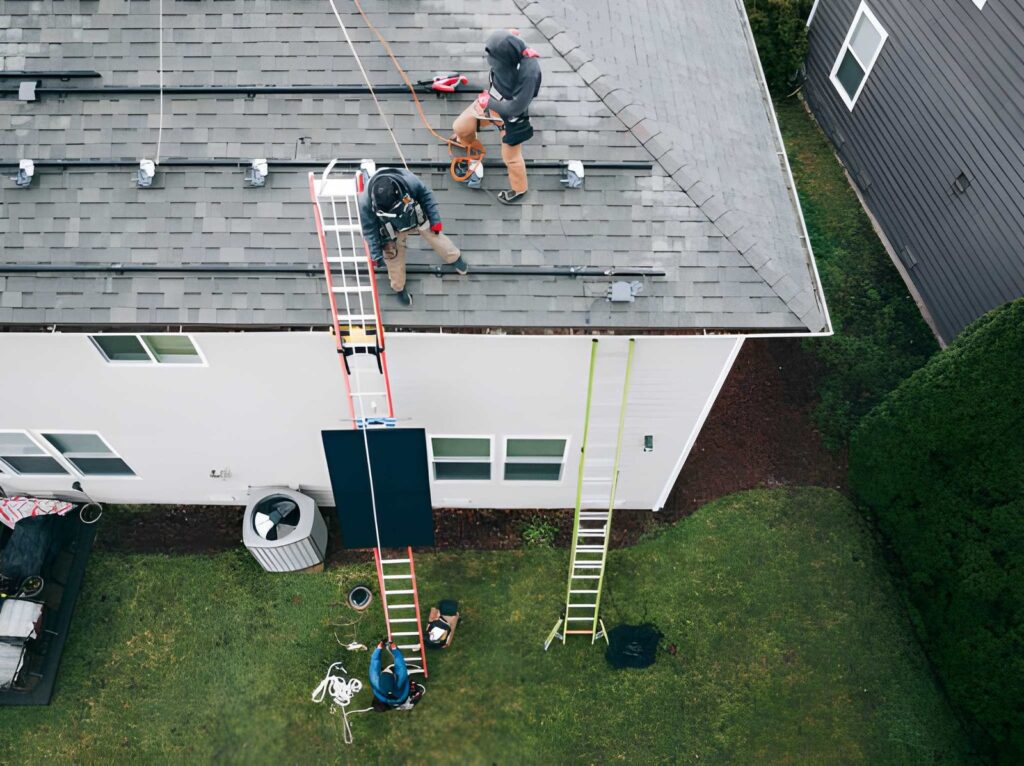
Before anything else, conduct a thorough inspection from the ground using binoculars. If you climb up, use a stable ladder, non-slip footwear, and a safety harness. Look for lifted, cracked, or missing shingles, damaged flashing, and clogged gutters.
Step 2 Gather Your Tools and Materials
To complete the repair properly, you need:
- Replacement shingles matching your existing roof
- Roofing nails and a nail gun or hammer
- Pry bar and utility knife
- Roofing cement and caulking gun
- Ladder and safety gear
- Flashing material (if applicable)
Step 3 Remove Damaged Materials
Carefully lift the surrounding shingles and remove the nails. Next, slide out the damaged shingle or cut away deteriorated decking. Avoid damaging neighboring materials in the process.
Step 4 Prepare the Surface
Clean the exposed area thoroughly. Remove debris, old sealant, and loose granules. Furthermore, allow the surface to dry completely before applying any new materials.
Step 5 Install New Materials
Slide the new shingle into position and align it with surrounding rows. Nail it at the correct position (typically four nails per shingle). After that, apply roofing cement under the overlapping edges.
Step 6 Seal and Waterproof
Apply a bead of roofing sealant along all edges, nail heads, and transition points. In addition, re-seal any flashing junctions to ensure a watertight result.
Step 7 Final Inspection
Walk the perimeter and visually confirm all repairs look flush and properly sealed. Additionally, run water from a garden hose to test for remaining leaks before closing the job.
Roof Repair Services Overview
Service | Description |
Shingle Replacement | Swap out individual or multiple damaged shingles |
Leak Detection & Repair | Identify and seal active leak sources |
Flashing Repair/Replacement | Restore watertight seals around penetrations |
Roof Deck Repair | Replace rotted or damaged structural decking |
Ridge Cap Replacement | Restore the protective cap along the roof peak |
Gutter Repair | Fix or replace gutters affecting roof drainage |
Moss & Algae Treatment | Chemical cleaning and preventive strip installation |
Emergency Tarp Installation | Temporary covering after storms or major damage |
Full Roof Restoration | Complete overhaul of worn roofing systems |
Skylight & Vent Resealing | Re-seal or replace flashing around roof penetrations |
Pro Tips for Long-Lasting Roof Repairs
- Inspect twice a year: ideally in spring and fall to catch minor issues before they escalate.
- Match materials carefully: Using the wrong shingle type or weight causes premature failure.
- Never repair in wet conditions: Moisture prevents sealants from bonding correctly.
- Work from the bottom up: Overlap new shingles over lower ones, just as they were originally installed.
- Document everything: Take before-and-after photos for insurance claims and future reference.
- Address attic ventilation: Poor ventilation causes heat and moisture buildup that degrades roofing materials from the inside.
When to Call a Professional
While DIY repairs work well for minor fixes, certain situations demand professional expertise. Specifically, contact a licensed roofing contractor when:
- The damage covers more than 30% of the roof surface
- You notice structural sagging or interior water damage
- The roof is older than 20 years
- You lack the physical ability or tools to work safely at height
- Multiple leak sources exist simultaneously
Frequently Asked Questions (FAQs)
Q1: How do I know if my roof needs repair or full replacement?
If damage covers less than one-third of the roof and the structure underneath remains sound, repairs typically suffice. However, widespread granule loss, multiple leaks, or a roof exceeding 20–25 years old usually calls for full replacement.
Q2: How long does a typical roof repair take?
Minor repairs such as replacing a few shingles take two to four hours. Conversely, more extensive work involving flashing, decking, or multiple sections may take one to two full days.
Q3: Can I repair a roof in winter?
Yes, although it requires extra caution. Use cold-weather roofing cement, avoid icy surfaces, and select materials rated for low temperatures. Nevertheless, warm and dry conditions always produce better results.
Q4: What causes roof damage most often?
Storm winds, hail, falling debris, UV exposure, and poor initial installation top the list. Additionally, clogged gutters that force water back under shingles cause significant ongoing damage.
Q5: Does homeowner’s insurance cover roof repairs?
Most policies cover sudden damage from storms, hail, or fire. However, gradual wear, lack of maintenance, or pre-existing conditions typically fall outside coverage. Therefore, contact your insurer promptly after any weather event.
Q6: How much does roof repair cost?
Costs vary widely. Minor shingle replacements range from $150 to $400, while flashing repairs run $200 to $600. Moreover, extensive deck or structural repairs can reach $1,000 to $3,000 or more depending on scope and materials.
Q7: How do I find a roof leak that isn’t directly above the water stain?
Water travels along rafters and decking before dripping, so the stain rarely marks the exact entry point. As a result, start your inspection higher up the slope and check all flashing, vents, and valleys systematically.
Final Thoughts
Ultimately, a healthy roof means a safe, comfortable, and energy-efficient home. By addressing damage promptly, choosing quality materials, and following proven repair techniques, you extend your roof’s life significantly. Moreover, combining regular roof inspections with quick action keeps small problems from becoming expensive disasters. Whether you tackle the job yourself or hire a professional, understanding the full repair process empowers you to make smart, informed decisions every time.